Common names include Yaupon Holly, Yaupon, Cassina
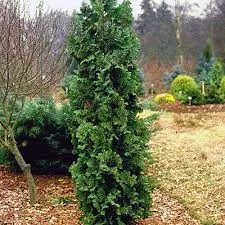
Yaupon Holly is native to a variety of areas including sandy woods, dunes, open fields, forest edges and wet swamps. This is a thicket-forming, broadleaf evergreen shrub or small tree that typically grows upright. Often trimmed into hedges. Yaupon is slow-growing and tends to get thick and twiggy on the inside, making it ideal for dense hedges but requiring careful pruning to shape it into a tree.
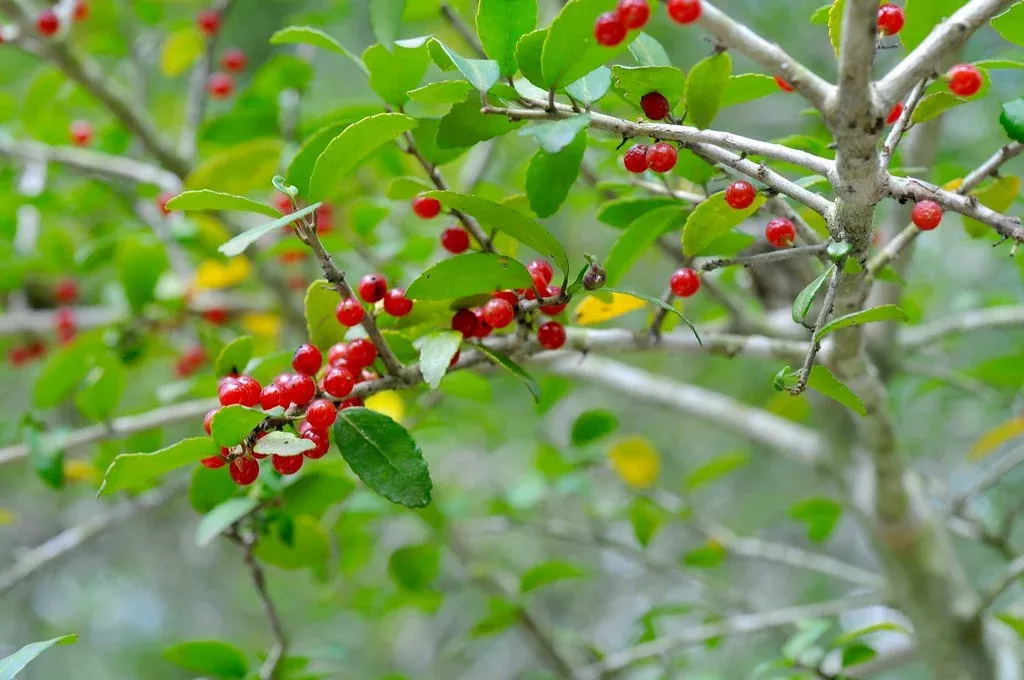
Small greenish-white flowers appear on male and female plants in spring. Flowers are fragrant but generally inconspicuous. Pollinated flowers on female plants give way to berry-like red (infrequently yellow) fruits (1/4” diameter) which ripen in fall and persist into winter. Female plants need a male pollinator in the area in order to bear fruit.
The leaves of the Yaupon Holly can be used to make a caffeinated tea. The flavor resembles another holly drink, the South American yerba mate, from Ilex paraguariensis. The berries are not edible by humans, but are a great food source for birds.
Yaupon Holly is a versatile plant that tolerates drought and poor drainage. It tolerates drought better than most other hollies, and is both heat and cold hardy (down to zone 7). It can often be grown successfully in hardiness zone 6, but may have some tip burn. It grows well in sandy, loamy, clay, limestone, or gravelly soils. You may prune it in the winter if needed. Promptly remove root suckers unless naturalization is desired.