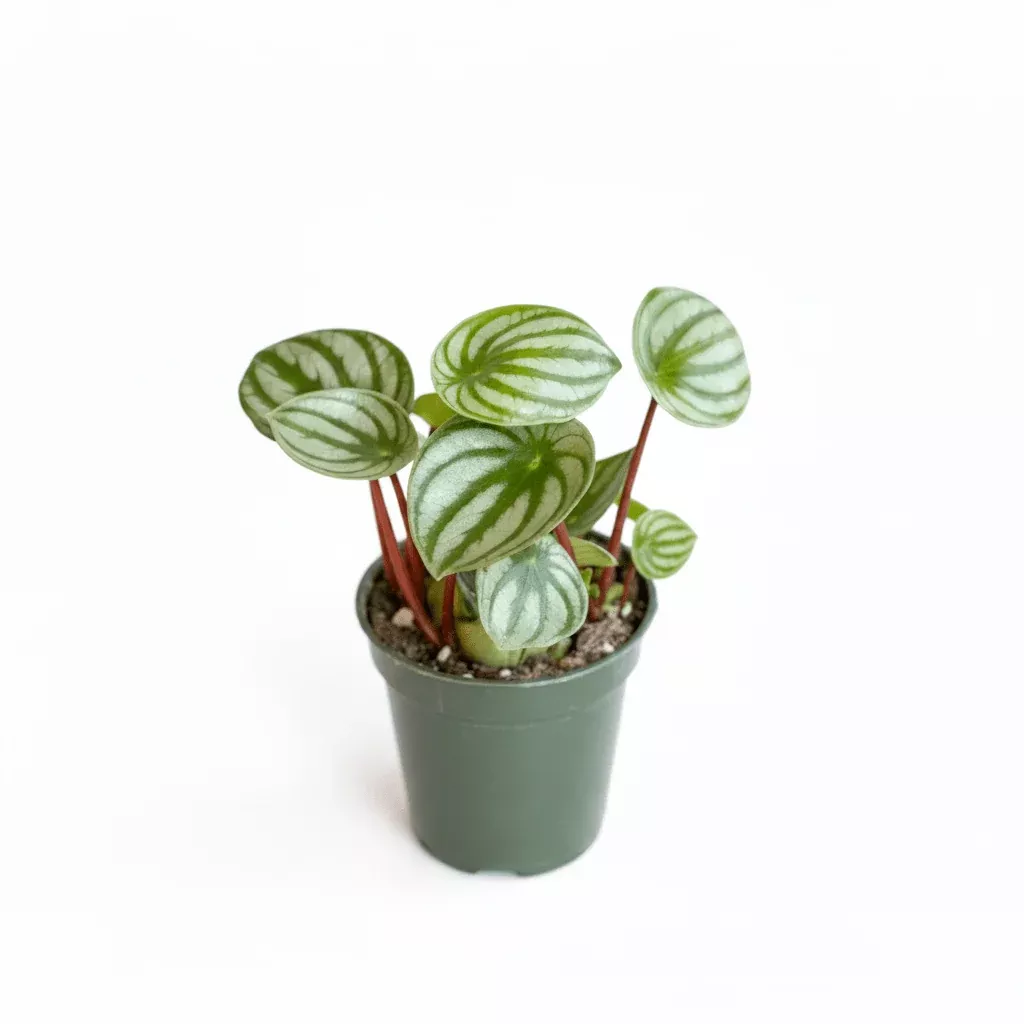
The Watermelon Peperomia (Peperomia argyreia) earns its name honestly — its round, fleshy leaves are striped in silver and deep green in a pattern that mirrors watermelon rind almost exactly. Red stems complete the look. It’s one of the most visually distinctive compact houseplants available, and one of the easiest to keep.
Native to the rainforests of South America, it grows naturally in the understory where light is filtered and humidity is high — conditions that translate well to most indoor environments. Non-toxic to cats, dogs, and humans.
What Makes This Plant Special
Unmistakable foliage: Silver and green striped leaves with red stems — no other common houseplant looks quite like it.
Compact and tidy: Stays 6–12″ tall and wide, making it ideal for desks, shelves, and small spaces.
Pet and child safe: Non-toxic to cats, dogs, and humans — verified by the ASPCA.
Beginner-friendly: Tolerates imperfect watering and a range of light conditions without drama.
Hanging basket option: Trails beautifully in a hanging basket as it matures.
Ed’s Plant Profile
Botanical Name:Peperomia argyreia
Pronunciation: pep-er-ROH-mee-uh ar-JER-ree-uh
Common Names: Watermelon Peperomia, Watermelon Begonia (misnomer)
Family: Piperaceae
Native Range: Rainforests of Brazil and Bolivia
Mature Size: 6–12″ tall and wide indoors
Care Guide
Light: Medium to bright indirect light is ideal. Avoid direct sun, which fades the silver striping. Tolerates lower light but growth slows.
Water: Allow the top 1–2″ of soil to dry between waterings. The fleshy leaves store moisture — overwatering is the most common mistake. Water less in winter.
Soil: Well-draining, airy mix. An orchid mix with added perlite works well. Avoid dense, moisture-retaining soils.
Humidity: Enjoys higher humidity but adapts to average home conditions. A humidifier nearby is a bonus, not a requirement.
Temperature: 60–85°F. Keep away from cold drafts, AC vents, and temperatures below 55°F.
Fertilizer: Once a month in spring and summer with a balanced liquid fertilizer at half strength. Skip in fall and winter.
Propagation: Leaf cuttings root easily in water or moist soil — one of the most satisfying plants to propagate.
Common Pests: Generally resilient. Fungus gnats, spider mites, or mealybugs may appear if soil stays too wet.
Toxicity: Non-toxic to cats, dogs, and humans ✓
Troubleshooting
Yellowing leaves: Overwatering or poor drainage. Let soil dry more thoroughly and check pot drainage.
Fading silver stripes: Too much direct light. Move to a spot with filtered or indirect light.
Drooping leaves: Usually underwatering. Water thoroughly and leaves should recover within a day.
Mushy stems: Root rot from overwatering. Trim affected roots, let dry, and repot in fresh well-draining mix.
Leggy growth: Insufficient light. Move closer to a window or add a grow light.
Fun Fact
Watermelon Peperomia does produce flowers — small, inconspicuous greenish-white spikes on tall stems in warmer months. They’re not the main event, but they’re a sign your plant is thriving.
More Resources
Read our full Peperomia Care Guide for in-depth advice. Building a pet-safe collection? See our guide to non-toxic houseplants.