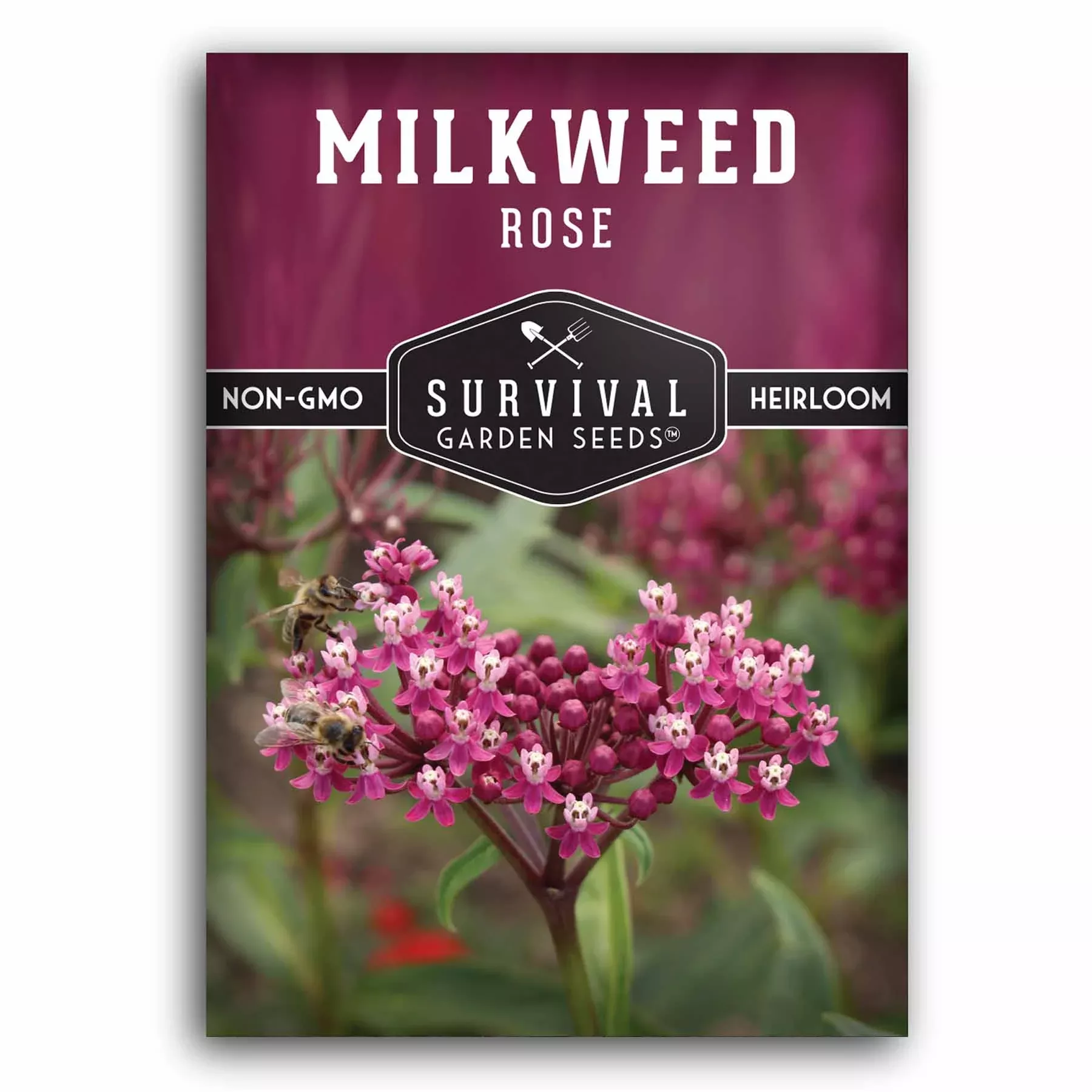
Support Monarch butterflies and build a thriving pollinator habitat with Rose Milkweed seeds, also known as Swamp Milkweed (Asclepias incarnata). This native perennial grows 24–40 inches tall and features smooth, narrow leaves topped with clusters of dusty rose to purple, star-shaped flowers. Rose Milkweed is an essential plant in the Monarch life cycle, providing nectar for adults and vital habitat and food for caterpillars.
Well-suited for moist soils and wetland-style plantings, Rose Milkweed offers strong ecological value without aggressive spreading. Its upright growth and soft pink blooms make it a beautiful and practical addition to pollinator gardens, rain gardens, and naturalized areas.
Swamp Milkweed with Distinct Beauty and Balance: Known by several common names—including rose milkweed, red milkweed, and marsh milkweed—Asclepias incarnata is native across most of North America. Unlike Common Milkweed, it is more clump-forming and easier to manage in garden settings.
Plant characteristics:
Native perennial wildflower
Grows approximately 24–40 inches tall
Narrow leaves with clusters of dusty pink to purple flowers
Thrives in moist soils, wetlands, and rain gardens
Deer and rabbit resistant
Why Customers Love Rose Milkweed Seeds:
Essential host plant for Monarch butterflies and caterpillars
Provides nectar for bees, butterflies, and hummingbirds
Less aggressive spread than Common Milkweed
Ideal for moist or wet garden areas
Supports conservation-focused and pollinator-friendly landscapes
How to Use / How to Grow: Sow seeds in moist, well-draining soil in full sun to partial sun. Rose Milkweed performs especially well in consistently moist locations such as rain gardens or near water features. Keep soil evenly moist during germination and early growth. Once established, plants are hardy and long-lived.
Cold Stratification for Better Germination: Rose Milkweed seeds benefit from cold stratification. To improve germination rates, place seeds on a damp paper towel, roll it up, and store it in the refrigerator for 2–3 weeks before sowing. This process mimics winter conditions and encourages stronger, more reliable sprouting.