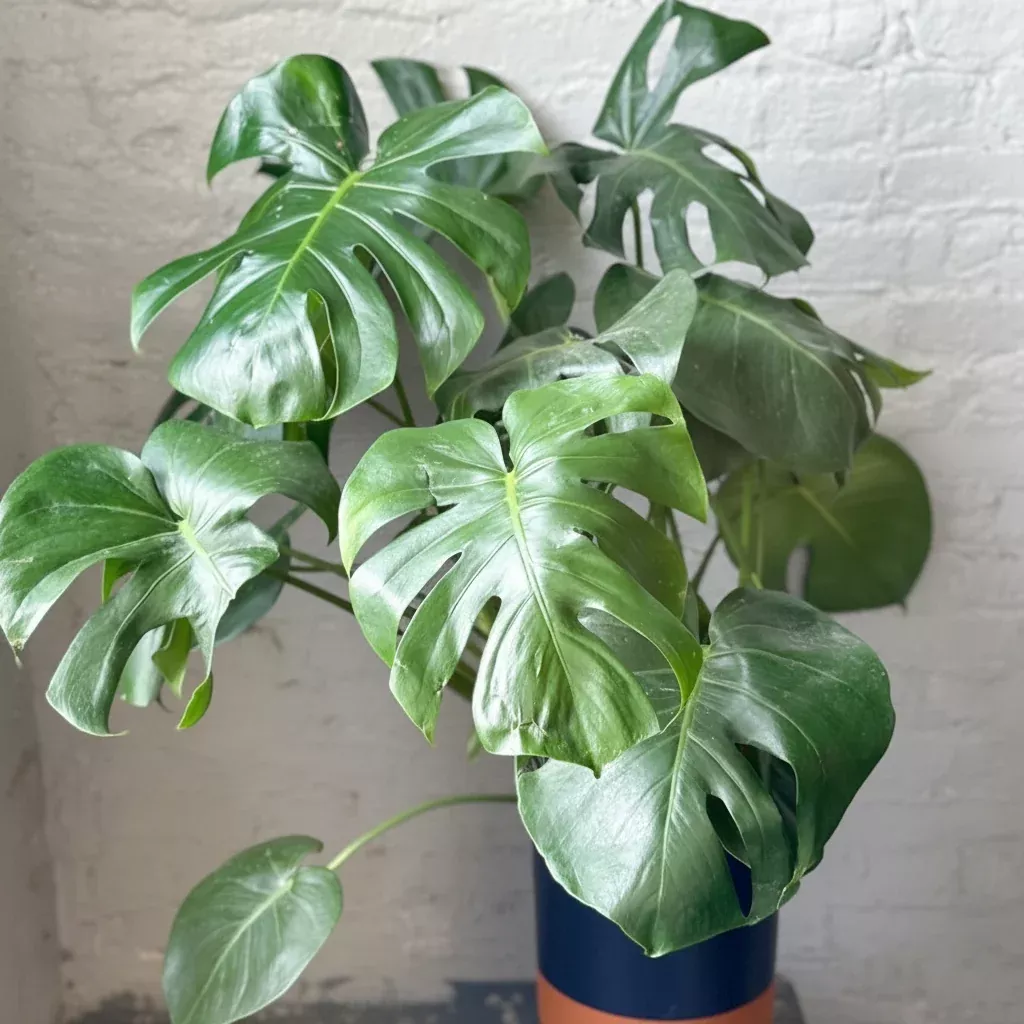
Monstera deliciosa is the plant that defined the modern indoor jungle. Its large, glossy leaves develop dramatic natural splits — called fenestrations — as the plant matures, creating a bold, sculptural presence that works in virtually any interior. It’s fast-growing, genuinely easy to care for, and one of the most recognizable houseplants in the world for good reason.
Available in three sizes: a compact 4″ starter, a mid-size 6″ with established growth, and a statement-ready 10″ floor specimen with fully fenestrated leaves.
Toxicity note: Toxic to cats, dogs, and humans if ingested. Keep out of reach of pets and children.
What Makes This Plant Special
Iconic fenestrated leaves: The natural splits develop as the plant matures — larger, more established plants produce increasingly dramatic leaf patterns.
Fast grower: With adequate light, Monstera deliciosa produces new leaves regularly and grows visibly month to month.
Scales with your space: Works as a tabletop plant at 4″, a shelf statement at 6″, or a full floor specimen at 10″.
Genuinely low maintenance: Tolerates lower light, irregular watering, and average humidity without complaint.
Why the leaves split: Fenestrations allow light to pass through the canopy and wind to move through the leaves without damage — a functional adaptation from its native rainforest habitat in Mexico and Panama.
Ed’s Plant Profile
Botanical Name:Monstera deliciosa
Pronunciation: mon-STER-ah de-lis-ee-OH-sah
Common Names: Monstera, Split-Leaf Philodendron
Family: Araceae
Native Range: Tropical rainforests of Mexico and Panama
Growth Habit: Climbing aroid; benefits from a moss pole or trellis as it matures
Toxicity: Toxic to cats, dogs, and humans if ingested
Care Guide
Light: Medium to bright indirect light is ideal. Tolerates lower light but produces fewer and smaller fenestrations. More light = faster growth and more dramatic splits. Avoid direct sun which scorches the leaves.
Water: Water thoroughly when the top 1–2″ of soil are dry. Avoid consistently soggy soil — root rot from overwatering is the most common issue. Yellow leaves usually signal too much water.
Humidity: Prefers moderate to high humidity but adapts well to average indoor conditions. No misting required.
Temperature: 65–85°F. Keep away from cold drafts and temperatures below 60°F.
Fertilizer: Every 2–4 weeks during spring and summer with a balanced liquid fertilizer. Skip in fall and winter.
Support: As the plant grows, a moss pole or trellis encourages larger, more fenestrated leaves — Monstera naturally climbs in the wild.
Pruning: Remove yellowing leaves at the base. Trim leggy growth to maintain shape.
Propagation: Stem cuttings with a node root easily in water or moist soil.
Pests: Watch for spider mites, especially in dry conditions. Wipe leaves regularly with a damp cloth.
Troubleshooting
Yellow leaves: Overwatering. Let soil dry more between waterings and check pot drainage.
No fenestrations on new leaves: Insufficient light or the plant is still young. Move to a brighter spot and add a moss pole to encourage mature leaf development.
Brown, crispy leaf edges: Low humidity or underwatering. Water more consistently and consider a humidifier nearby.
Leggy growth with small leaves: Needs more light. Move closer to a window.
Aerial roots: Normal and healthy — these are how Monstera climbs in the wild. You can tuck them into the soil or direct them onto a moss pole.
Read our Monstera Care Guide for expert tips on moss poles, propagation, and encouraging larger fenestrations. Also available: Monstera adansonii for a compact, hole-leaf alternative.