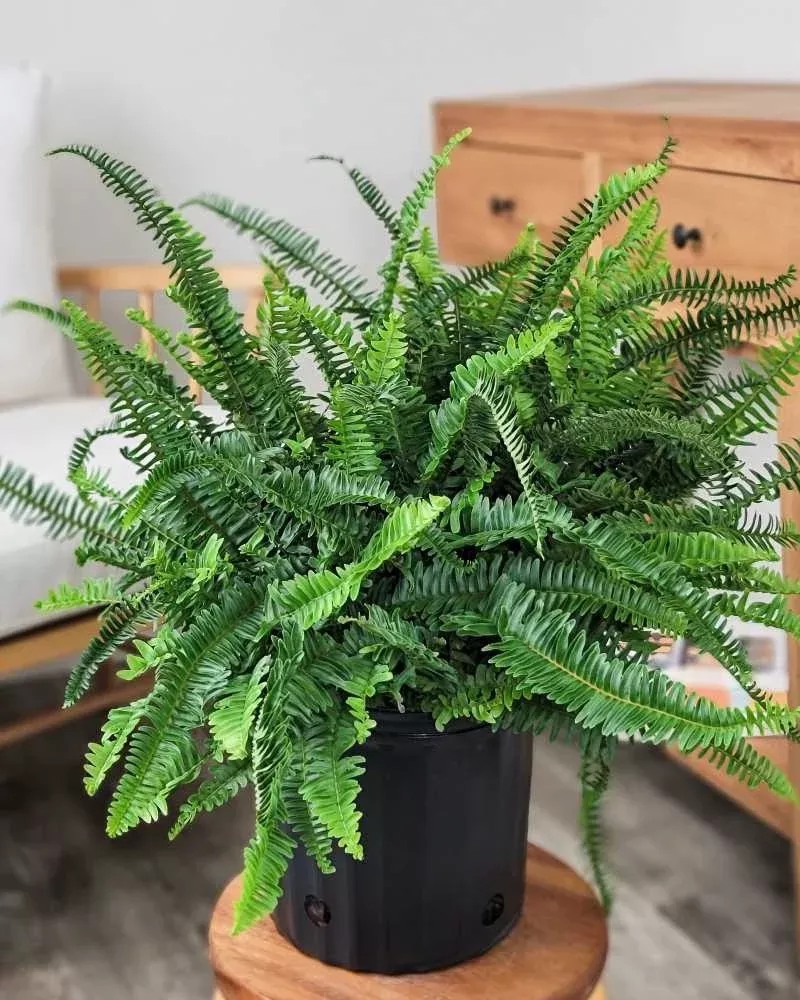
The Kimberley Queen Fern, also known as the Australian Sword Fern (Nephrolepis obliterata), is a popular houseplant that brings an inviting, lush green vibe to your indoor space. Native to Australia, it’s well-known for its resilient nature and its elegant, sword-shaped fronds that grow upright, rather than arching out, lending a unique, tailored appeal to your décor.
Caring for your Queen Fern
Caring for a Kimberley Queen Fern is not overly complex, making it a great choice for both experienced and novice plant owners. Its easygoing nature, paired with its distinct, upright fronds, creates a stunning visual display that adds a breath of fresh air to any room. Plus, as non-toxic plants, Kimberley Queen Ferns are safe to have around pets and children, making them a wonderful addition to any plant lover’s collection. With proper care, your Kimberley Queen Fern will reward you with its vibrant, lush greenery for many years to come.
Light
When it comes to light, Kimberley Queen Ferns enjoy bright, indirect sunlight. They can tolerate lower light conditions, but to see them truly thrive and maintain their rich green color, a spot near a north or east-facing window would be ideal. Direct sunlight, however, can scorch the leaves, causing them to turn brown and crispy.
Humidity
Being tropical plants, Kimberley Queen Ferns enjoy warm temperatures and high humidity. They prefer temperatures between 65 and 75°F during the day, but can tolerate nighttime temperatures as low as 50°F. Any temperature below this can lead to leaf damage.
Humidity is key for these plants. They thrive in a humid environment, which is why they are commonly found in bathrooms or kitchens where humidity levels are generally higher. If your home is particularly dry, consider placing the fern on a tray filled with pebbles and water, which increases humidity as the water evaporates. Another option is to use a room humidifier or routinely mist your plant with water.
Water
The Kimberley Queen Fern likes its soil to be consistently moist but not waterlogged. During the warmer, growing months (spring and summer), water thoroughly when the top inch of soil feels dry to the touch. Reduce watering in the cooler months, but don’t let the soil dry out completely.
Fertlizer
These ferns are not heavy feeders, but they do benefit from regular feeding during the growing season. Use a balanced, liquid houseplant fertilizer every month from early spring to late summer. Always water the plant before applying fertilizer to prevent root burn.
Soil
A well-draining, peat-based potting mix is ideal for Kimberley Queen Ferns. Make sure your pot has sufficient drainage holes to avoid waterlogging, which can lead to root rot.
Repotting is typically required every 2-3 years or when the fern outgrows its current container. Spring is the best time to repot, just before the active growing season begins. When repotting, choose a container that’s only slightly larger than the previous one. A too-large pot can lead to overwatering and root rot because the soil will stay wet for too long.
Pruning and Maintenance
Regular pruning helps maintain the Kimberley Queen Fern’s shape and encourages fuller growth. Prune off any brown or yellowing fronds at their base, as these are likely dead or dying and can sap energy away from the plant. Also, remove any fronds that appear overcrowded to improve air circulation and prevent fungal growth.
Common Pests and Diseases
Like many houseplants, Kimberley Queen Ferns can be susceptible to pests such as aphids, mealybugs, and spider mites. Regularly check your plant for signs of infestation and use a mild insecticidal soap or neem oil as a treatment. Overwatering or under-watering can also cause fungal infections or root rot. If your fern has brown, mushy roots, or you notice a musty smell, root rot could be the culprit. Reduce watering and ensure your pot has good drainage.
Propagation
The Kimberley Queen Fern is propagated by division. This is best done in spring when repotting. Simply remove the fern from its pot and gently separate the root ball into two or more sections, each with plenty of fronds and roots. Replant each section in its own container filled with fresh, well-draining potting mix. Keep the new plants in a warm, humid environment and provide bright, indirect light.