Hosta ‘Captain Kirk’ (Brill 1999) (25) Bare Root Plants
An impressive, eye-catching large hosta; makes an excellent specimen plant
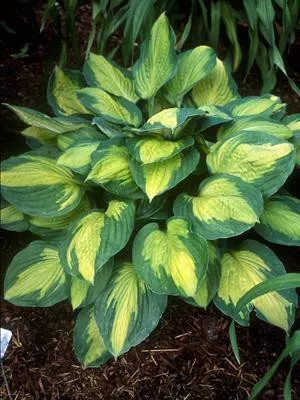
An improved sport of ‘Gold Standard’ with much wider, dark green margins, gold centers, and heavier substance
Pale lavender flowers appear on 30″ scapes in midsummer
Developed by a Trekkie, you can beam down the sun’s rays on this sun tolerant Hosta.
Royal Horticultural Society’s Award of Garden Merit — 2012 American Hosta Society Benedict Garden Performance Award Honorable Mention — 2016 American Hosta Society Benedict Garden Performance Award of Merit — 2017
Height: 20 Inches Spread: 36.0 Inches Scape Height: 30 Inches Hardiness Zones: 3,4,5,6,7,8,9 Flower Color: Purple shades Foliage Color: Variegated Part Shade (4-6 hrs. Direct Sun) – Full Shade (<4 hrs. Direct Sun) Average to Consistent Water Needs Average to Fertile Soil Quality Bloomtime: Midsummer Attracts Hummingbirds Growth Rate: Medium
Border Plant, Container, Cut Foliage, Easy To Grow, Mass Planting, Specimen, Focal Point
Hosta ‘Captain Kirk’ is a captivating perennial that adds a bold touch to any shade garden. This cultivar, an improved sport of the renowned ‘Gold Standard’ hosta, boasts striking variegated foliage and elegant lavender blooms. Introduced by Iowa’s Kirk Brill, an avid Trekkie, the Hosta ‘Captain Kirk’ was named after the famous Star Trek captain. With its impressive size, rapid growth rate, and resilience, ‘Captain Kirk’ has become a favorite among gardening enthusiasts. In this comprehensive guide, we will explore the characteristics, care requirements, and growing conditions that make this hosta a stellar addition to your landscape.
Characteristics Hosta ‘Captain Kirk’ is best known for its large, eye-catching leaves. These emerge chartreuse in spring, transitioning to a vibrant gold with wide, dark green margins as the season progresses. The leaves are widely oval, slightly arching, dimpled, and strongly veined, forming an overlapping mound of foliage. The foliage tends to remain dense right to the ground. The striking contrast between the gold centers and dark green edges creates a visually dynamic display that adds depth and texture to shady gardens. ‘Captain Kirk’ is an improved sport of ‘Gold Standard’ with thicker leaves and heavier substance. It is also a recipient of the prestigious Award of Garden Merit of the Royal Horticultural Society.
In midsummer, pale lavender flowers rise on tall scapes, reaching about 30 inches in height. These delicate blooms provide an elegant contrast to the bold foliage and attract pollinators such as hummingbirds.
‘Captain Kirk’ is a medium to large-sized hosta, typically growing to about 20 inches tall and spreading 36 inches wide, reaching up to 3 feet wide at maturity. It is a vigorous grower, quickly establishing itself and forming a dense mound of foliage that requires no facer plants.
Care Requirements Hosta ‘Captain Kirk’ is essentially a maintenance-free perennial. It is a relatively low-maintenance plant, making it an excellent choice for gardeners of all skill levels. Here are some essential care tips to ensure its optimal health and vigor:
Light: ‘Captain Kirk’ thrives in partial to full shade. While it tolerates more sun than many other hosta varieties, excessive sunlight can bleach the golden centers of the leaves. For the best color, plant it in an area that receives morning sun and afternoon shade.
Soil: This hosta prefers moist, well-drained soil rich in organic matter. Sandy loam is ideal, as it provides good aeration for the roots. While it can tolerate clay soil, amending it with compost or other organic matter will improve drainage and fertility.
Water: ‘Captain Kirk’ prefers consistently moist soil but should not be allowed to dry out completely. Water regularly, especially during hot, dry periods.
Fertilizer: While not a heavy feeder, ‘Captain Kirk’ benefits from regular fertilization. Apply a balanced fertilizer in early spring and again after the first wave of flowering.
Maintenance: This hosta requires minimal pruning. Remove any discolored or damaged leaves as needed. In the fall, you can cut back the foliage to tidy up the garden.
Mulch: In northern zones, consider mulching with finely shredded organic material to prevent heaving during winter. However, be aware that mulch can also provide a haven for slugs, so monitor the plants regularly.
Pests and Diseases: Hostas are susceptible to slugs and snails, which can damage the foliage. Watch for holes in the leaves and take appropriate measures to control these pests. ‘Captain Kirk’ is generally disease-resistant, but it is essential to provide good air circulation to prevent fungal issues.
Toxicity: Hosta ‘Captain Kirk’ is toxic to dogs, cats, and horses. Keep it out of reach of pets to prevent accidental ingestion.
Ideal Growing Conditions Hosta ‘Captain Kirk’ thrives in USDA Hardiness Zones 3-9. It prefers a shady location with moist, well-drained soil. Hostas like ‘Captain Kirk’ are great to brighten a woodland garden. Here is a summary of the ideal growing conditions:
Sunlight: Part shade to full shade (4-6 hours of direct sunlight or less)
Soil: Moist, well-drained, rich in organic matter
Water: Average water needs; keep soil consistently moist
Temperature: Tolerates a wide range of temperatures, but prefers cool, humid conditions
pH: Adaptable to various soil pH levels, but prefers slightly acidic to neutral soil (5.5-7.5)
Mature field grown plant shipped bare root.
Click here for more ordering and shipping information