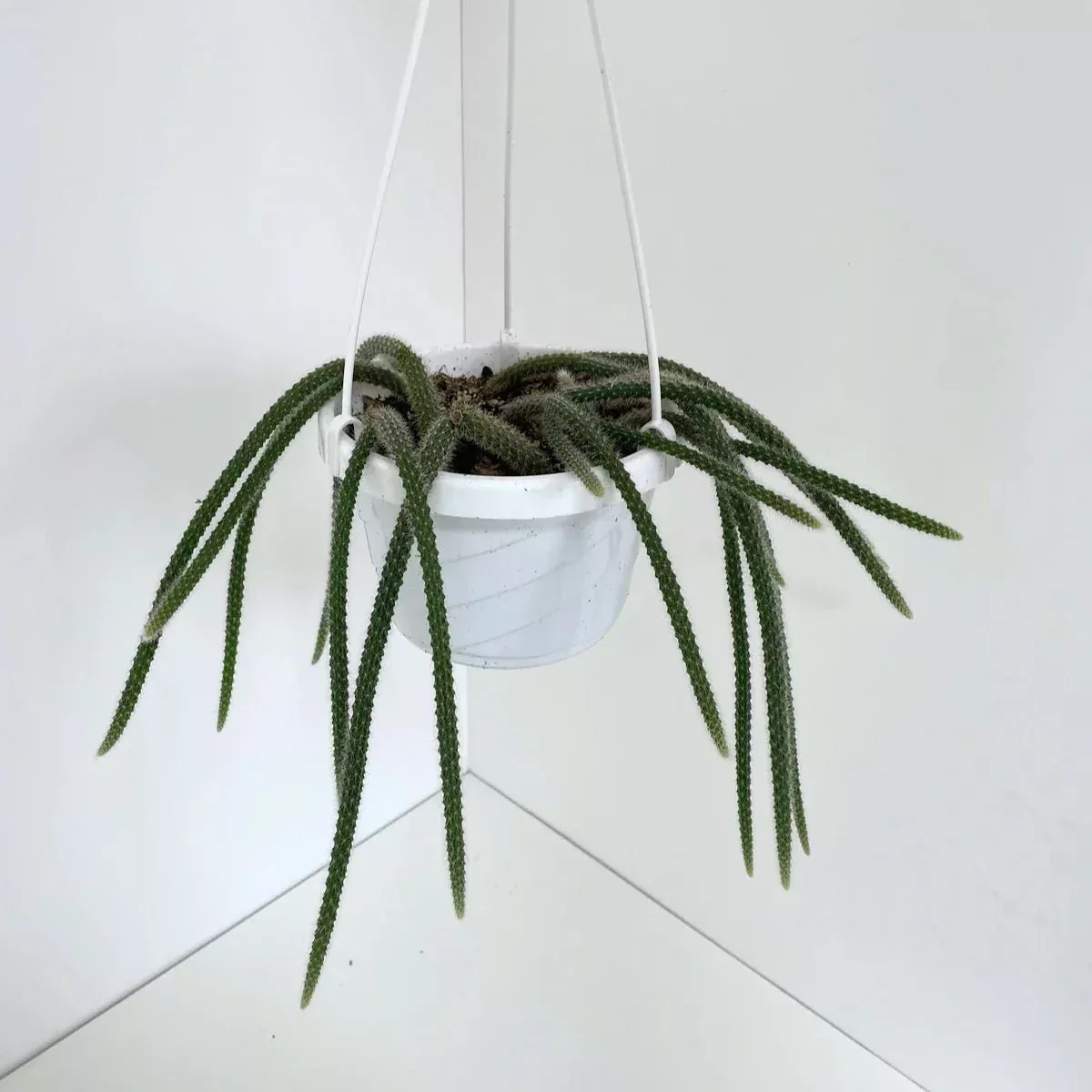
Disocactus flagelliformis, commonly known as the Rattail Cactus, is a striking desert cactus prized for its long, rope-like stems that cascade dramatically over the edges of pots and hanging baskets. With its soft spines, thick cylindrical stems, and impressive trailing habit, this cactus brings sculptural desert charm to any bright indoor space.
Despite its exotic appearance, the Rattail Cactus is wonderfully easy to care for. Naturally growing as an epiphyte in rocky cliffside environments, it thrives in well-drained, airy substrates and requires far less water than typical tropical houseplants. Give it bright light, let it dry out between waterings, and it will reward you with vigorous growth and, when happy, spectacular pink tubular blooms reminiscent of a Christmas cactus flower.
Light: Bright light to full sun indoors; thrives in sunny windows
Water: Allow soil to dry between waterings; keep on the dry side to prevent rot
Humidity: Average household humidity
Temperature: 50–75°F
Feeding: Fertilize monthly with diluted cactus fertilizer during spring and summer
Propagation: Stem cuttings
Growth Habit: Long, trailing stems that can extend several feet
Pests: Watch for mealybugs and aphids
Toxicity: Toxic if ingested by pets or humans
Why You’ll Love the Rattail Cactus
This visually dramatic cactus adds dynamic movement and an unmistakable desert aesthetic to your collection. Its resilience and drought tolerance make it ideal for plant parents who appreciate low-maintenance, high-impact plants. When given