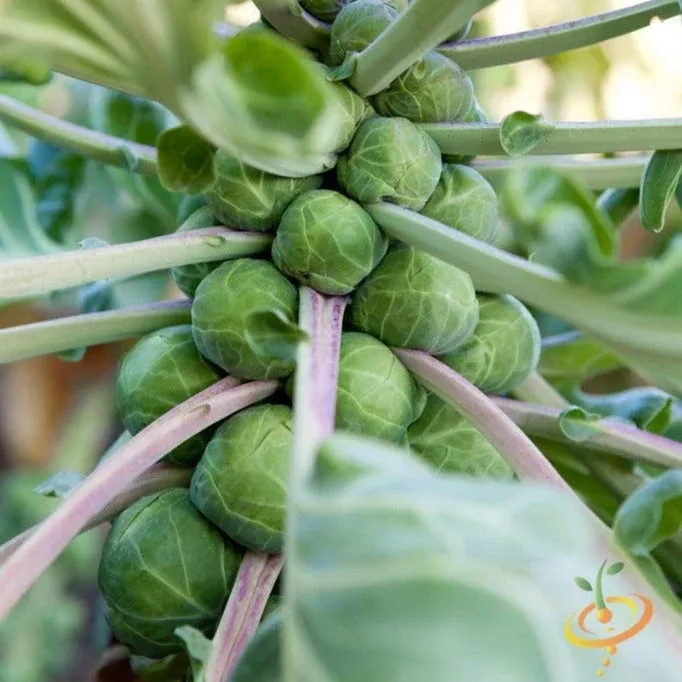
Long Island Catskill Brussels Sprouts: A Classic Garden Favorite
Long Island Catskill brussels sprouts are a time-tested variety that has earned its place in home gardens across North America. Known for their reliable growth and excellent flavor, these sprouts deliver consistent results whether you’re a seasoned gardener or just starting out.
Why Choose Long Island Catskill?
This variety stands out for its ability to thrive in cool-season gardens. The plants produce firm, medium-sized sprouts that are tender and flavorful when harvested at the right time. Long Island Catskill brussels sprouts are particularly valued for their uniform size and tight heads, making them ideal for both fresh eating and cooking.
Growing Conditions
Brussels sprouts prefer full sun and well-draining soil rich in organic matter. Plant seeds in mid-summer for a fall harvest, as these cool-season crops actually improve in flavor after a light frost. Space plants about 18 to 24 inches apart to allow adequate air circulation and room for the sprouts to develop properly.
Care and Maintenance
Keep the soil consistently moist throughout the growing season, and provide regular feeding with a balanced fertilizer. As the plants grow, you can remove lower leaves to encourage sprout development on the main stalk. Watch for common pests like cabbage worms and use appropriate organic or conventional controls as needed.
Harvesting Your Crop
Sprouts are ready to harvest when they reach about 1 to 1.5 inches in diameter. Twist or cut them from the stalk, starting from the bottom and working your way up. The plant will continue producing new sprouts as you harvest, extending your season well into winter in many climates.
Long Island Catskill brussels sprouts reward patient gardeners with a bountiful harvest of delicious, nutritious vegetables that taste far better than anything you’ll find in a grocery store.
In Summary
Brussels Sprouts – Long Island Catskill seeds are an open-pollinated, heirloom Brussels sprout variety grown for compact, miniature cabbage-like sprouts harvested in cool weather.
Brussels Sprouts – Long Island Catskill seeds are suitable for gardeners planning a cool-season vegetable crop with a 90-120 day harvest window. They fit spring seed-starting schedules where seeds are started indoors in early May and transplanted outdoors in June or early July. This makes them a practical option for growers who use transplant-based brassica production rather than direct sowing.
This variety is a fit for home gardeners seeking heirloom Brussels sprouts for raised beds, in-ground rows, or structured vegetable plots where 3-foot row spacing and 30-inch plant spacing can be maintained. It is also appropriate for growers managing crop rotation carefully, since Brussels sprouts should not be planted within 10 feet of brassica ground used in the past 3 to 7 years.
Plant spacing: 30 inches between plants
Row spacing: 3 feet apart
Isolation guidance: do not grow within a 10-foot radius of brassica growing locations used in the last 3 years, preferably 7 years
Days to maturity: 90 to 120 days
Features
Open-pollinated heirloom Brussels sprout variety
Produces miniature cabbage-like heads
Best development occurs in cool weather
Seeds are typically started indoors in early May for transplanting in June or early July
Plants can become top-heavy and may require staking in windy locations
Brassica crop with shallow roots and standard brassica pest and disease susceptibility
Edible sprouts are harvested from the bottom of the stalk upward as they mature
Sprouts are noted as a source of calcium, iron, and vitamins A and C; they also contain sulforaphane
Care
Start seeds indoors in early May
Transplant in June or early July
Maintain consistent watering
Stake plants if they become top-heavy, especially in windy sites
Monitor early for brassica pests and diseases
Avoid composting roots from affected brassica plants