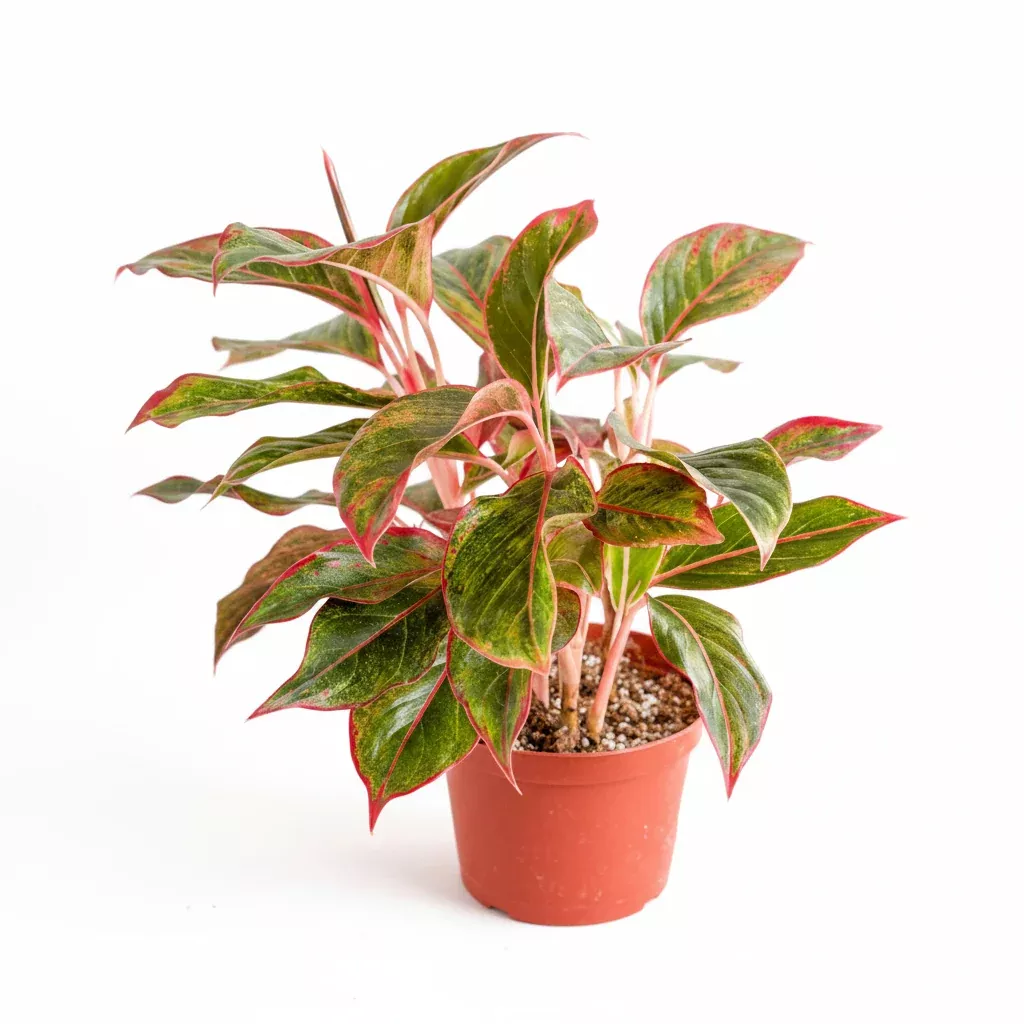
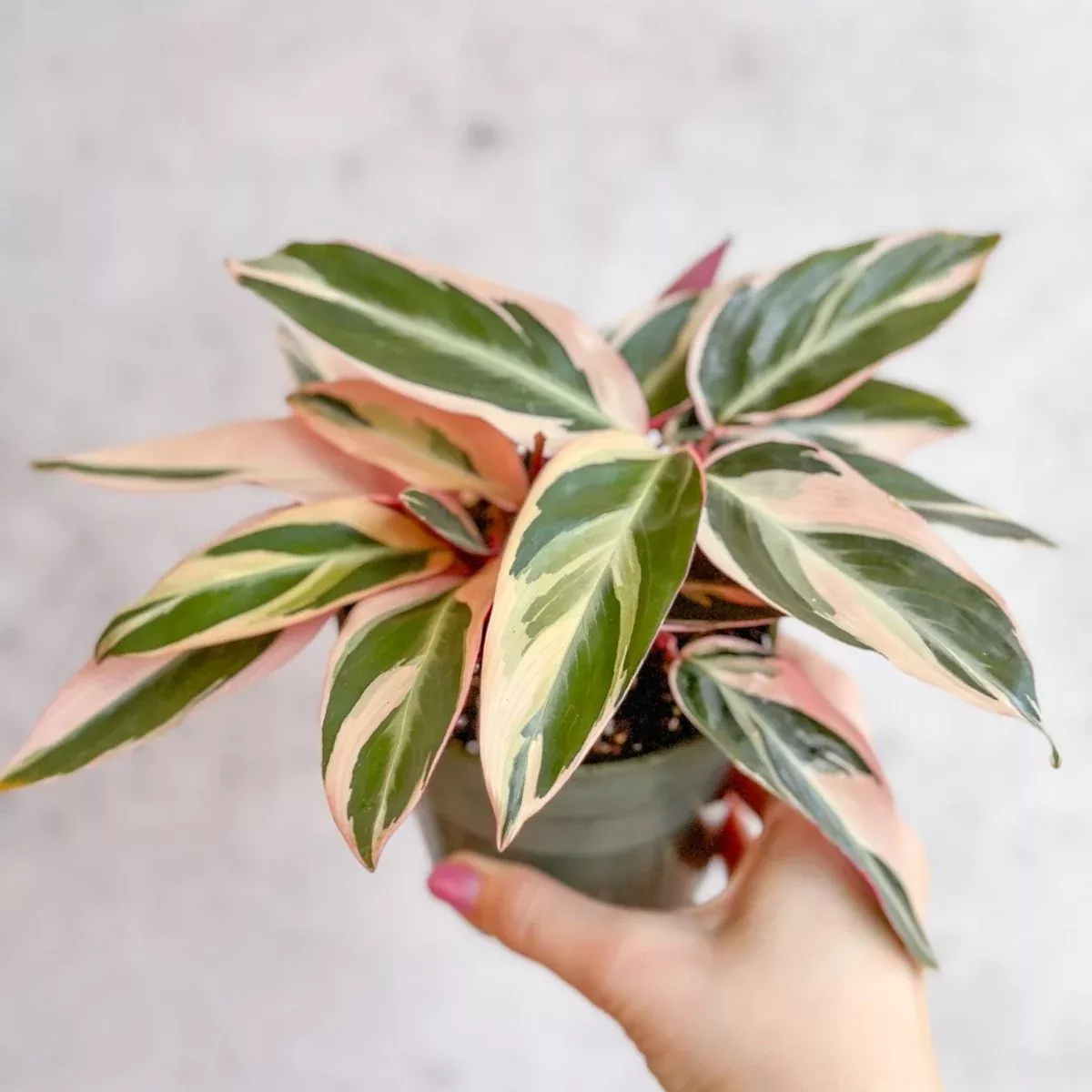
The Aglaonema ‘Siam Aurora Red’ is one of the most visually striking Chinese Evergreens available — its lance-shaped leaves are edged and flushed with deep red and pink, contrasting against a dark green center that intensifies in lower light. It’s a plant that earns its place in a room and holds it without demanding much in return.
Aglaonemas have been cultivated across Southeast Asia for centuries, traditionally valued as symbols of good fortune. The Siam Aurora is a modern cultivar bred specifically to push the red coloration further than any wild species achieves. The result is a plant that looks like it requires expertise but genuinely doesn’t.
Note: Toxic to cats, dogs, and humans if ingested. Keep out of reach of pets and children.
What Makes This Plant Special
Dynamic color response: In brighter indirect light, the red and pink hues intensify dramatically. In lower light, the green deepens and the red recedes — the same plant reads differently depending on where you put it.
Genuinely low-light tolerant: One of the few colorful houseplants that doesn’t revert to plain green in shadier conditions.
Slow, tidy growth: Stays compact and doesn’t need frequent repotting or pruning to look good.
Pest-resistant: More resilient than most aroids to common houseplant pests.
Plant Profile
Botanical Name: Aglaonema ‘Siam Aurora’
Common Names: Siam Red, Red Chinese Evergreen, Philippine Evergreen, Firecracker Plant
Family: Araceae
Native Range: Southeast Asia and New Guinea (cultivar)
Mature Size: 18–24″ tall and wide indoors
Care Guide
Light: Bright indirect light brings out the most vivid red coloration. Tolerates medium to low light well, but colors will be less intense. Avoid direct sun, which scorches the leaves.
Water: Keep soil consistently moist in spring and summer — water when the top inch is dry. Reduce frequency in winter. Never let it sit in standing water.
Soil: Well-draining potting mix. A peat or coco coir base with added perlite works well.
Humidity: Prefers moderate to high humidity. A humidifier helps in dry indoor environments, especially in winter.
Temperature: 65–80°F. Sensitive to cold — keep away from drafts, AC vents, and temperatures below 60°F.
Fertilizer: Once or twice during the growing season with a balanced liquid fertilizer. Does not need heavy feeding.
Repotting: Every 2 years or when rootbound. Prefers a snug pot.
Propagation: Root division or stem cuttings. Division is easiest when repotting.
Common Pests: Generally pest-resistant. Occasionally susceptible to aphids, mealybugs, and spider mites — inspect new growth periodically.
Toxicity: Toxic to cats, dogs, and humans if ingested. Contains calcium oxalate crystals.
Troubleshooting
Fading red color: Move to a brighter spot with more indirect light. Color intensity is directly tied to light levels.
Yellow leaves: Usually overwatering or poor drainage. Let soil dry slightly more between waterings.
Brown leaf tips: Low humidity or fluoride sensitivity. Use filtered water and increase ambient humidity.
Drooping leaves: Either underwatering or cold stress. Check soil moisture and move away from drafts.